

They Weren't Having the Same Conversation
A recent conversation about Cowboy Carter revealed an enduring leadership lesson: people often believe they're debating the same issue when they're actually answering different questions. Kimberly D. Sanders explores how executive misdiagnosis—not disagreement—is often the hidden cause of stalled decisions, organizational conflict, and ineffective solutions through the lens of The Third Perspective™.
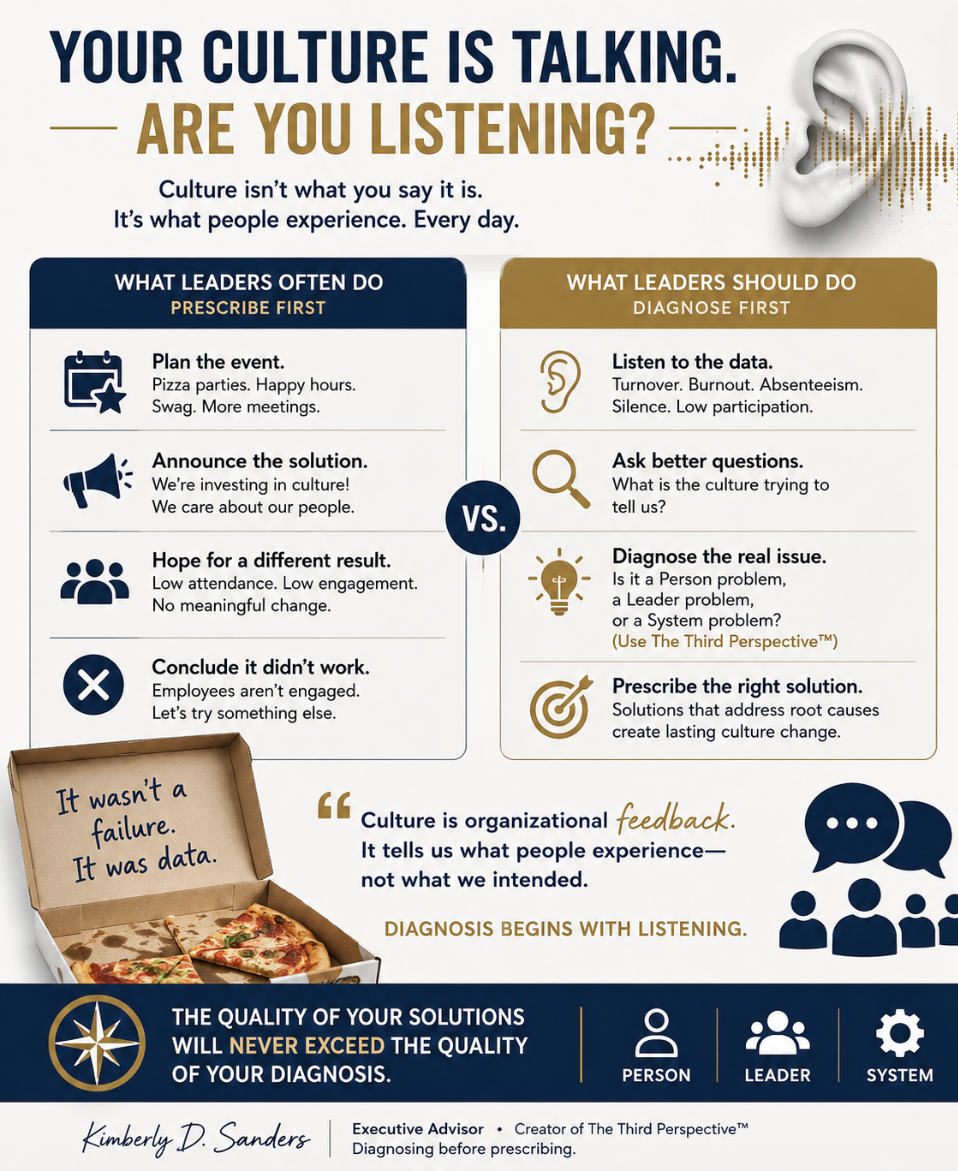
Your Culture Is Talking. Are You Listening?
This is where many leaders unintentionally get stuck.
They see the symptom and prescribe a solution.
Low morale?
Plan another event.
Low engagement?
Launch another initiative.
Poor participation?
Create another committee.
But every solution begins with an assumption.
If the assumption is wrong, the solution rarely works.
That's why I often say:
Most organizations don't have the problem they think they have. They have a diagnosis problem.

What Deserves Attention?
The challenge is that organizations quietly reward responsiveness. Leaders become conditioned to answer every message, attend every meeting, solve every interruption, and extinguish every fire.
Eventually, they mistake motion for leadership.
But leadership isn't measured by how quickly we react.
It's measured by what we choose to steward.
Every "yes" is also a "not now" to something else.
Attention is one of a leader's most valuable resources.
Once it's fragmented, clarity becomes difficult.
And when clarity suffers, diagnosis suffers.
That's why I encourage leaders to ask a different question.
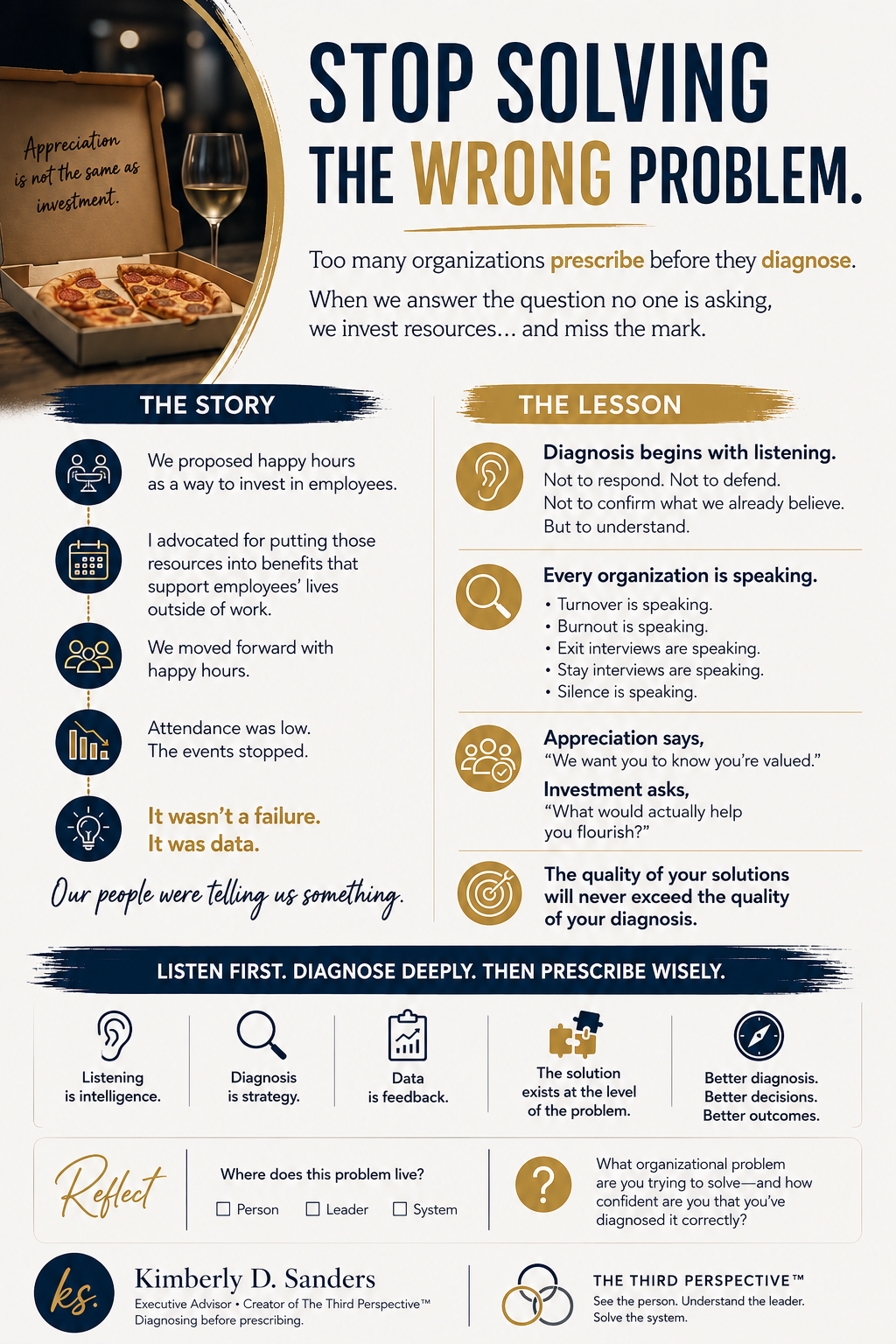
The Most Expensive Mistake Organizations Make
Several years ago, our leadership team discussed ways to invest in employees. One proposal was a series of after-hours happy hours.
I offered a different perspective. What if the greatest investment wasn't asking employees to spend more time with us? What if it was investing those resources into benefits they could use with the people who matter most to them?
We moved forward with the happy hours. I supported the decision wholeheartedly. Attendance was low. Eventually, the events stopped. Many organizations would call that a failed initiative. I wouldn't. I'd call it a diagnosis.
The low attendance wasn't the problem.
It was the answer.
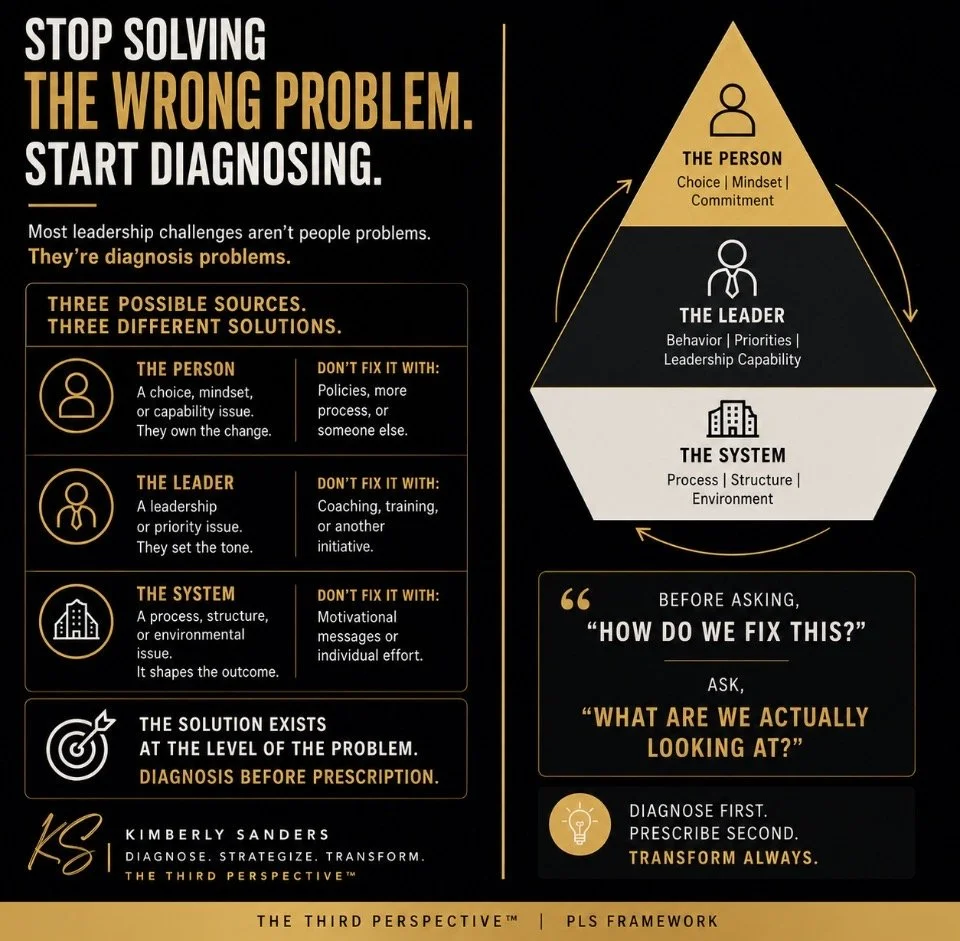
Most Leadership Problems Aren't Leadership Problems.
Organizations don't suffer from a solution problem—they suffer from a diagnosis problem. Before you prescribe another solution, ask a different question: Where does the problem actually live?