
“For more than two decades, I’ve helped organizations navigate the decisions that shape how people work, lead, and experience the workplace.”
Kimberly D. Sanders, SHRM-CP, PHR, is an Executive People Strategist, Fractional Chief People Officer, advisor, speaker, and leadership facilitator with more than two decades of experience in human resources and organizational leadership.
She is the creator of The PLS Framework™ (Person–Leader–System), The Third Perspective™, The Experience Check™, and The Decision Before the Decision™.
Her work focuses on organizational diagnosis, leadership accountability, consequential people decisions, employee experience, trust, and people systems.

Today, she brings that experience to executives and organizations navigating consequential people, leadership, and organizational challenges. Her work helps leaders see what they may be too close to see, distinguish evidence from assumption, and understand what is actually producing the outcome.
Because the quality of the decision depends on the quality of what you see before you make it.

M Y S T O R Y
The work came first. The frameworks came later.
I learned this work from inside the work. For more than two decades, I’ve worked inside organizations helping leaders navigate the people decisions that shape performance, culture, trust, and organizational effectiveness.
My experience spans executive people strategy, employee and labor relations, organizational development, talent and workforce strategy, leadership development, performance management, compliance, policy, and people operations.
I’ve worked from inside organizations—not simply adjacent to them.
I know the realities behind the advice: competing priorities, imperfect information, limited resources, legal and operational considerations, board and executive expectations, and the pressure to make consequential decisions before every answer is available.
Through that work, I began to recognize a pattern:
The problem presented first was not always the problem that needed to be solved.
An employee issue could reveal a leadership problem. A leadership problem could expose a broken system. A policy problem could actually be an execution problem. A breakdown in trust could trace back to decisions made long before anyone recognized the damage.
So I learned to look beyond the first explanation—to examine what happened, what shaped it, and what the organization itself might be contributing to the outcome.
That way of working eventually became a body of work.
Today, it informs the frameworks I’ve developed and the way I advise executives and organizations facing complex people and organizational challenges.
I bring the understanding of a practitioner, the discipline of an executive, and the independence of an advisor.
Executive People Strategist · Fractional Chief People Officer · Creator of the PLS Framework™ · Speaker & Facilitator
I’m interested in what is true—not what is easiest to conclude.
When I enter a complex situation, I don’t begin by deciding who is right.
I look at what happened. What was expected. What was communicated. What was documented. What people experienced. What leadership did—or didn’t do. What the system made easier, harder, rewarded, tolerated, or left unclear. And what happened before the moment everyone is now focused on. That distinction matters.
Because sometimes the employee needs to be held accountable. Sometimes the leader does. Sometimes the system is producing exactly the behavior everyone keeps trying to correct. And sometimes all three are true at once.
My job is not to protect one perspective. It is to help leadership see enough of the picture to respond to the right problem.
M Y A P P R O A C H
A clearer way to see what’s happening.
The Third Perspective™ reflects the discipline of looking beyond competing explanations to see what the situation itself is telling us.
The PLS Framework™ (Person–Leader–System) gives leaders a structured way to examine where an organizational problem is being produced, reinforced, or sustained.
The Experience Check™ examines the distance between what leadership intended and what people actually experienced.
The Decision Before the Decision™ traces the decisions, conditions, and turning points that created the decision now in front of you.
These frameworks weren’t created in theory and then taken into organizations.
They grew from the work.
From seeing what leaders miss when they move too quickly. From watching organizations solve symptoms while the conditions producing them remain untouched. From calculating the high cost of premature decisions. And from learning that better organizational decisions often begin with a better diagnosis.
My Standards:
Diagnose before prescribing →The presenting problem is a starting point, not a conclusion.
Evidence before assumption → Perception matters. So do facts, patterns, documentation, context, and what the organization itself has created.
Accountability with precision → Accountability works best when it is placed where responsibility actually belongs—not where it is easiest to place it.
Independence matters → Sometimes the people closest to the situation are too close to see all of it. I bring fresh eyes without becoming another side in the conflict.
The goal is organizational capacity → The strongest engagement doesn’t leave an organization dependent on me. It leaves leaders better equipped to see, decide, and lead after the engagement ends.

B E Y O N D T H E W O R K
There’s a whole person behind the frameworks.
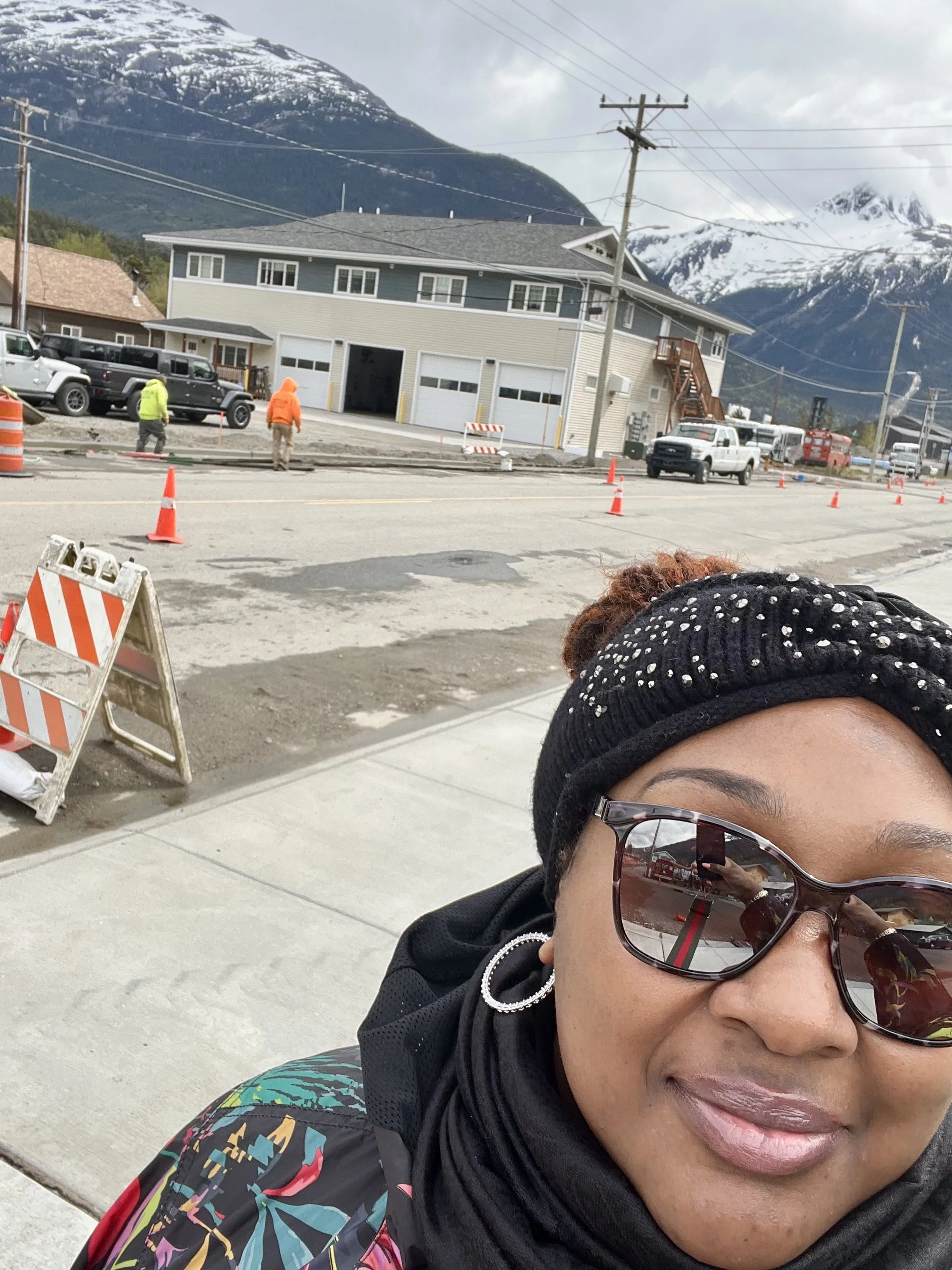
📍 Skagway, Alaska
I am deeply serious about leadership, people, systems, and the consequences of the decisions we make. I care about the work.
I also believe deeply in having a life beyond it.
Outside the executive room, I’m a wife, a mother, a bonus mom, a woman of faith, a writer, an increasingly enthusiastic photographer, a traveler whenever I can make it happen, a cyclist when northeastern US weather cooperates, and someone who can turn dinner into a full production because I decided the vegetables needed a better plan.
I notice things. A lot of things.
A beautiful aerial view. The way a room feels. A sentence that doesn’t quite sit right. The local food everyone says I have to try. The leadership pattern hiding underneath a completely unrelated conversation. The key change in the music.
I’m curious by nature, and I pay attention. Some of my perspective has been shaped in executive rooms. Some through faith and family. And some has come from traveling somewhere new, taking a photograph, riding my bike, trying the food a place is known for, or simply slowing down long enough to notice something beautiful. I’ve learned to make room for the things that widen my perspective, spark my curiosity, and remind me that there is always more to see and experience. And, not everything has to become work to be meaningful.
I can move from an executive strategy conversation to writing an article, to redesigning a webpage, planning my next trip, experimenting in the kitchen, or realizing I am approximately three unanswered questions away from creating another framework without a hitch.
Underneath all of it, though, is something pretty consistent:
Love people. Tell the truth. Steward what has been entrusted to you. Build what you are called to build.
And, pray (or take three deep breaths) before you send the email.
Leadership carries consequences.
Influence should be exercised with care. Leadership decisions affect careers, livelihoods, teams, families, trust, and the way people experience an organization. They deserve more than instinct, convenience, or the loudest perspective in the room.
I believe clarity and accountability can coexist with humanity.
Organizations can pursue results without treating people as disposable. Leaders can hold others accountable while remaining willing to examine their own leadership. And the systems surrounding people deserve the same scrutiny as the people working inside them.
Sometimes that requires the humility to ask:
What if there is something here I haven’t seen yet?
If you’re facing something consequential, complicated, or simply no longer making sense from where you’re sitting, bring it to me. Whether you're navigating a difficult leadership challenge, preparing your organization for change, or looking for a speaker who will challenge the way your audience thinks, I'd be honored to partner with you.
You don’t need to know which framework applies. You don’t need to know which service you need. You don’t even need to be certain you’ve identified the right problem.
Sometimes what you need isn’t another opinion. You need another perspective.