

What Deserves Attention?
The challenge is that organizations quietly reward responsiveness. Leaders become conditioned to answer every message, attend every meeting, solve every interruption, and extinguish every fire.
Eventually, they mistake motion for leadership.
But leadership isn't measured by how quickly we react.
It's measured by what we choose to steward.
Every "yes" is also a "not now" to something else.
Attention is one of a leader's most valuable resources.
Once it's fragmented, clarity becomes difficult.
And when clarity suffers, diagnosis suffers.
That's why I encourage leaders to ask a different question.
The Most Expensive Mistake Organizations Make
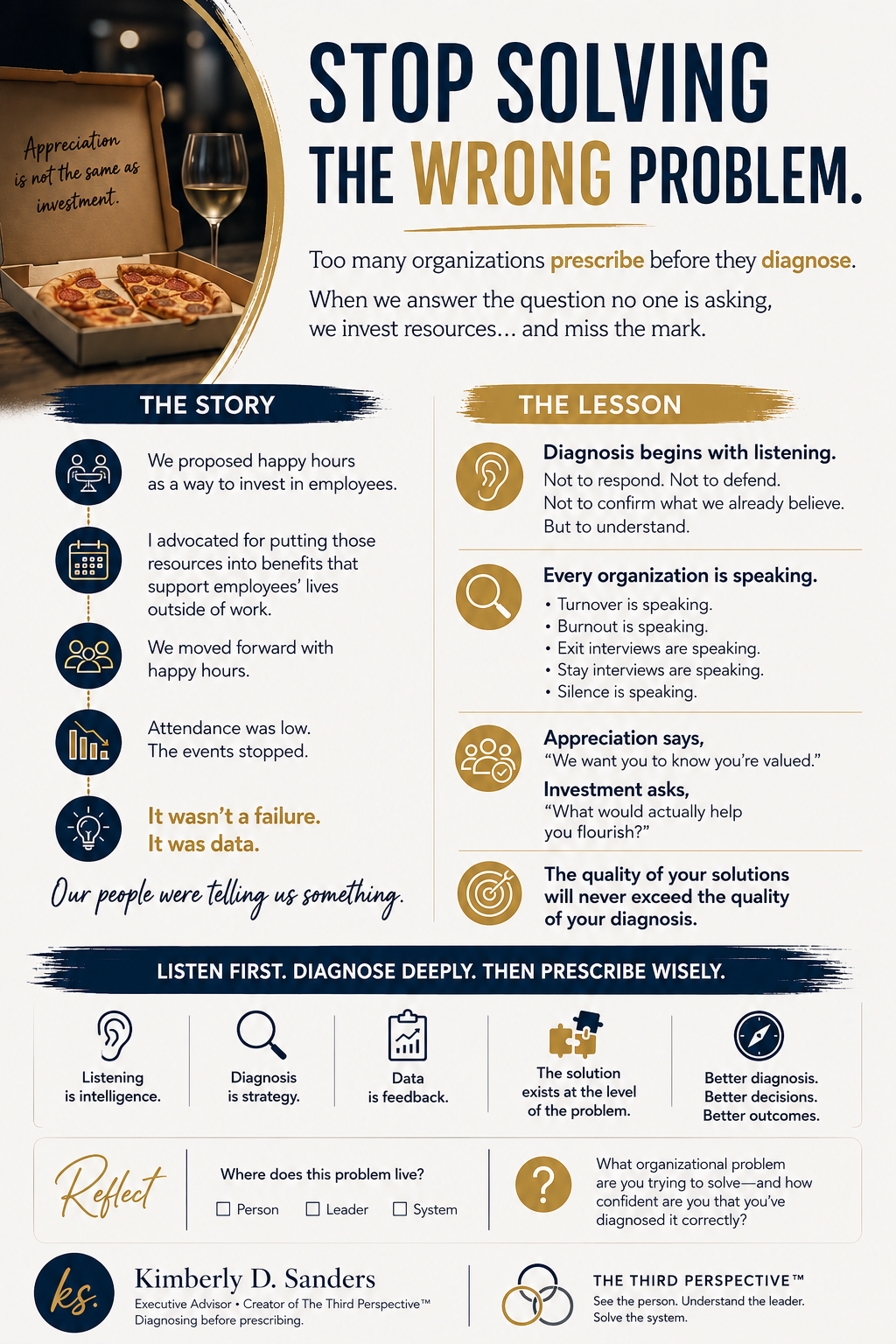
Several years ago, our leadership team discussed ways to invest in employees. One proposal was a series of after-hours happy hours.
I offered a different perspective. What if the greatest investment wasn't asking employees to spend more time with us? What if it was investing those resources into benefits they could use with the people who matter most to them?
We moved forward with the happy hours. I supported the decision wholeheartedly. Attendance was low. Eventually, the events stopped. Many organizations would call that a failed initiative. I wouldn't. I'd call it a diagnosis.
The low attendance wasn't the problem.
It was the answer.
The Third Perspective™
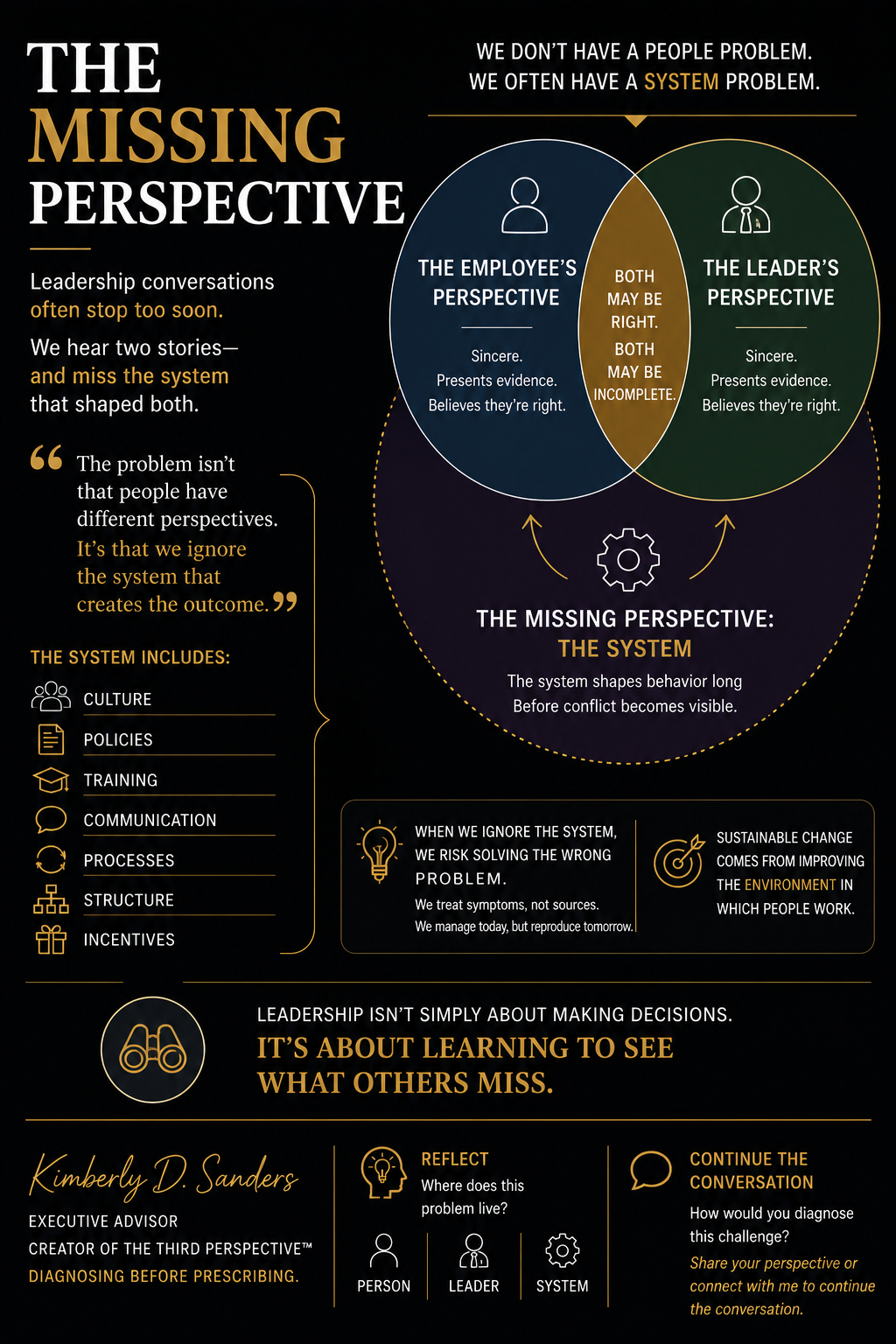
Every person behaves inside a system. Before a leader ever gives feedback...Before an employee ever makes a decision...Something has already been teaching them. Culture. Processes. Policies. Communication. Incentives. Training. Structure. Every organization has a system. And every system is producing something. The system is never neutral. It rewards certain behaviors. It tolerates others. It quietly teaches people what matters. By the time conflict becomes visible, the system has already influenced both sides. Which means the question isn't simply,
"Who's right?"
It's...
"What produced both perspectives?"
Kimberly D. Sanders
Executive Advisor • Creator of The Third Perspective™ • Diagnosing before prescribing.
Stop Asking Who's Responsible.
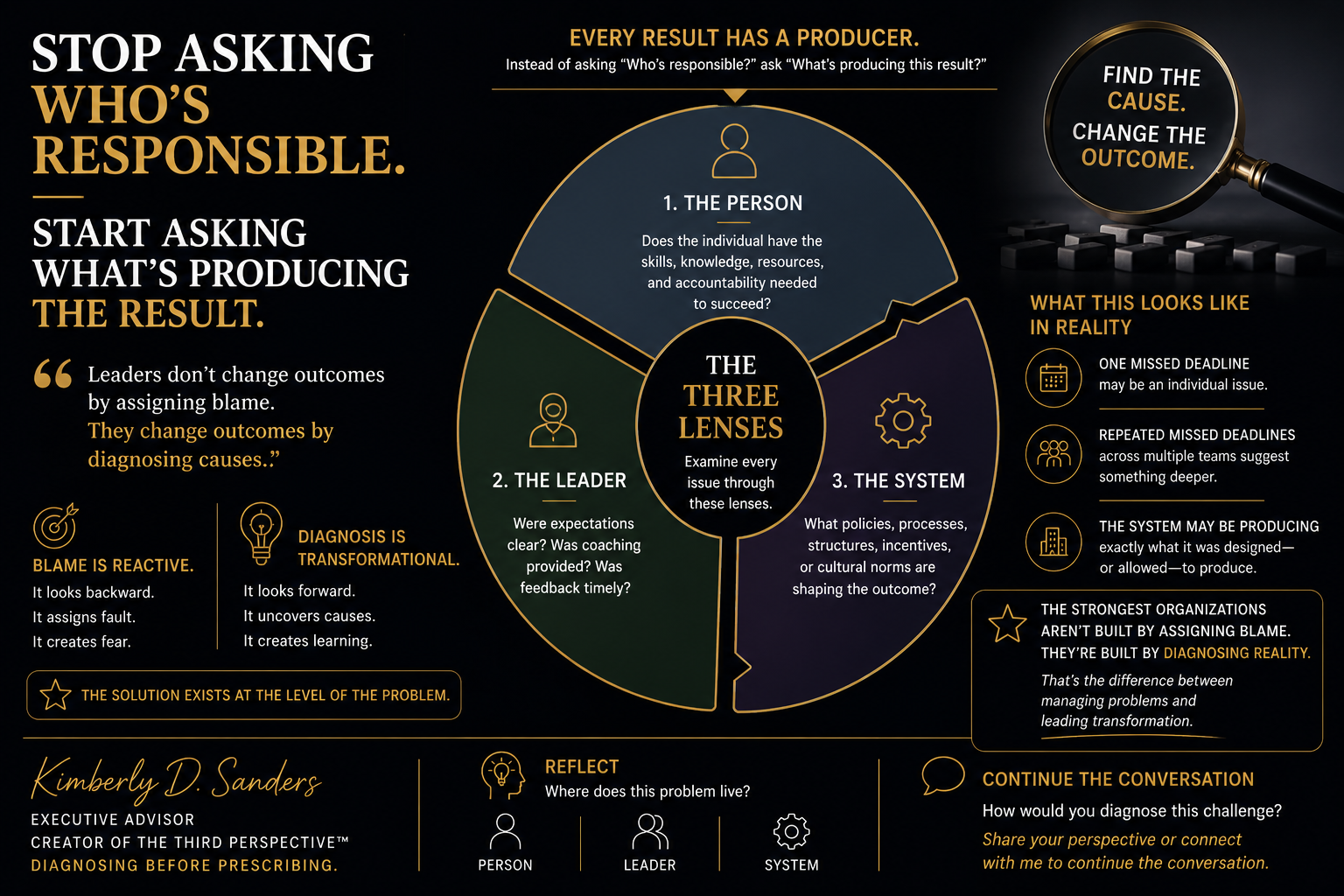
If the system keeps producing the same result, replacing people rarely solves the problem. Blame is reactive. Diagnosis is transformational. Blame asks, "Who failed?" Diagnosis asks, "What created this?" One looks backward. The other changes the future. Organizations built on blame create fear. Organizations built on diagnosis create learning. That's why the strongest leaders spend less time assigning fault...
...and more time understanding causes.
Clarity Is Kindness
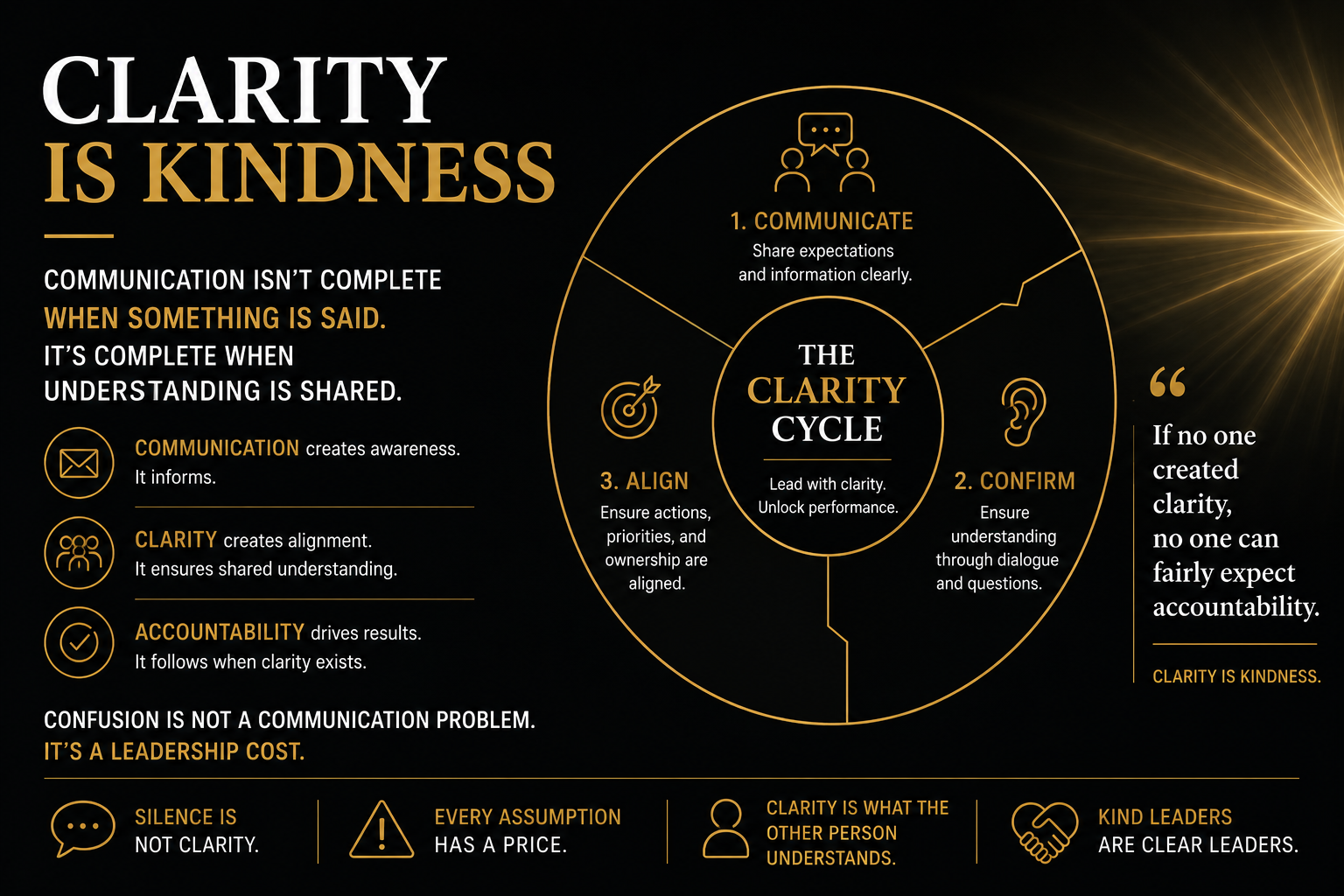
The most expensive misunderstandings in organizations rarely begin with bad intentions. They begin with untested assumptions. Those phrases are expensive. Not because people are careless. Because leaders often mistake communication for comprehension.
Kimberly D. Sanders
Executive Advisor • Creator of The Third Perspective™ • Diagnosing before prescribing.